And yet, sometimes you really can find a diamond in the mud!
Usually there’s no reason to linger in the long tunnel at Proletarska metro station. This time, as I was walking past a book stall spread out on the dirty floor, among a multitude of colorful covers my eye caught on one single book. I couldn’t believe my eyes.
“How much is it?”
“30 hryvnias,” the hustler smiled.
“I’ll take it. Do you have the other two volumes?”
“No, they’ve already been taken.”
What different attitudes two different people can have: one was foisting wastepaper on a sucker, while the other was buying a Stradivarius violin for the price of plywood.
Meet the most sensible book on computing technology: Meet the Computer.
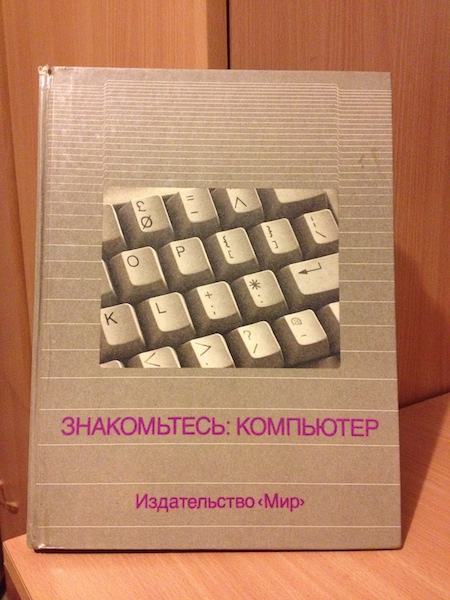
People periodically ask me for advice: “I want to become a programmer. What book would you recommend?” Sure, you can recommend Stroustrup, but a beginner is unlikely to read past the introduction. And never mind beginners — plenty of “seniors” haven’t read Stroustrup either. So before taking on a programming language, you need to understand what a computer is, how it works, and what the prerequisites for its creation were. And this book is exactly about that.
I read this book several times in early childhood, then several times when I was school age, then several times when I was a student, then once in grad school, and now I’ve started rereading it for the eleventh time. And what do you think? Every time I find something new! For example, I was able to read and understand a sample program in Smalltalk, which is the mother of Objective-C, which I learned over the last three years.
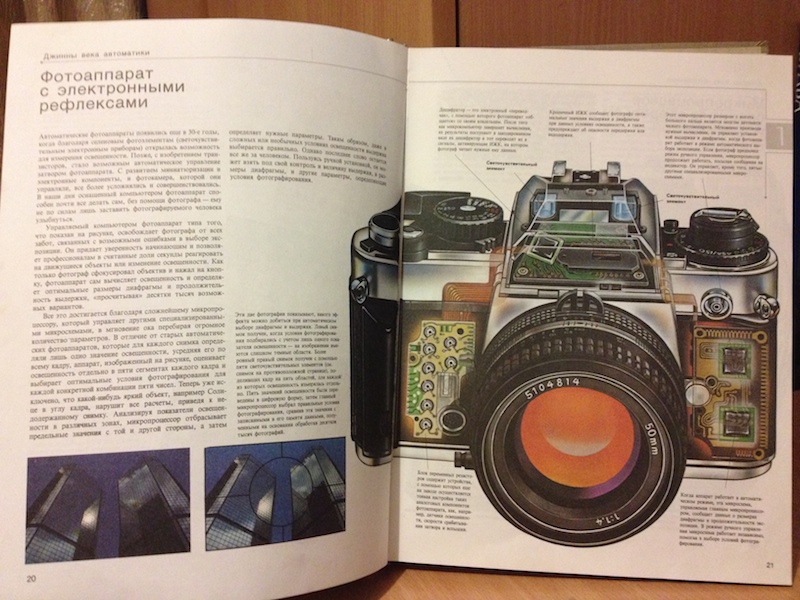
In the early nineties, not everyone had ordinary cameras, and from this book I had already learned how a digital one was built:
Where else would I have seen a detailed description of every step of photolithography — the process of making transistors?
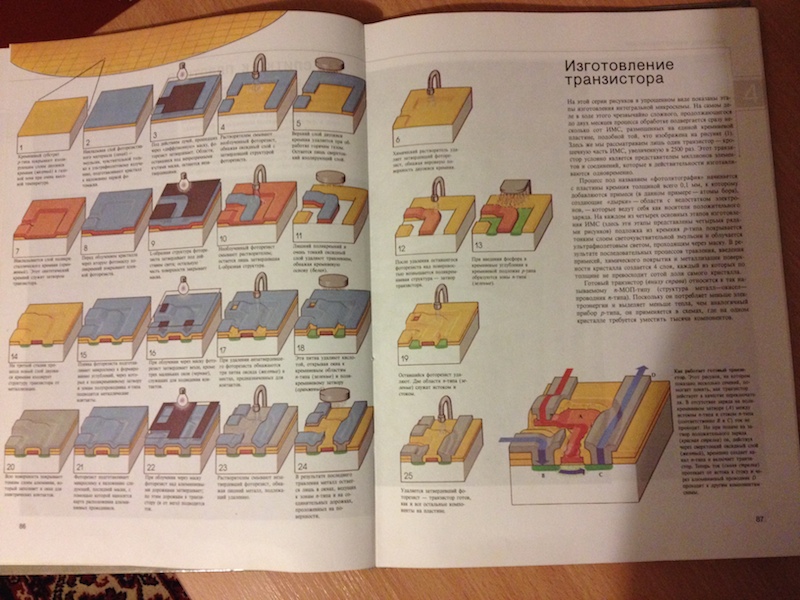
And it also had chapters on Boolean algebra, binary encoding, the structure of a compact disc, the “smart home,” three-dimensional graphics, and so on. From this book I learned who John von Neumann, Bill Gates, and Steve Jobs were. When at school the teacher asked, “What is the first programmer’s name?”, I answered without hesitation, “Ada Lovelace,” and I was right. In eleventh grade I gave my classmates lectures on computer organization and checked all the programming tests for all the parallel classes. And all of this thanks to a book that today was valued at 30 hryvnias — the cost of one glass of that piss alcoholics usually drink on a Friday evening.
If it so happened that I were allowed to read only one book in my life, I would choose Meet the Computer.