It was late evening in the early ’90s. My dad, as usual, was sitting in the corner of the room at the table that served as his workshop, and by the light of a desk lamp he was soldering a board. I peered over his shoulder and got interested: the board was big, and he wasn’t soldering ordinary transistors, resistors, and capacitors into it, but small rectangular black many-legged “bugs.”
— Dad, what are you soldering?
— It’s a computer, son.
— Are we going to have a computer?
— No, I’m soldering this for another uncle, and I’ll solder one for us later.
A week later I learned that some uncle had backed out of the computer. Thus, the legendary ZX Spectrum clone in the “Krasnodar 1” implementation appeared in our home. Or maybe “Krasnodar 2.” Or “Leningrad 1.” I don’t remember anymore. Anyway, the post isn’t about that, so I’ll write about the magical ’90s and the “Spectrum” when I turn 80, so please hang in there for another 50 years or so.
A personal computer appeared at home. The question of learning what it was and how to work with it suddenly became pressing. There was no internet yet back then. But the internet was quite successfully replaced by my mom, who worked at the bookstore on Ordzhonikidze Ave. It’s a pity the store has already been closed, and the avenue will soon be renamed. Anyway, the post isn’t about that, so I’ll write about the Ukrainian government’s policy of destroying culture when I turn 80, so please hang in there for another 50 years or so.
My experience of learning programming on my own from books began with a fiasco. I entered a program that asked my name and printed “Hello, Vova!” on the screen, and nothing happened. I was either 7 or 8, and I thought the computer would understand on its own when the program was ready and run it on its own. I sat there, looking at the code on the screen, but nothing happened. I had to reread the chapter once more to understand: you had to write the RUN command. I wrote the command, and the program worked. That was when I realized I would become a programmer. Anyway, the post isn’t about that, so I’ll write about the programs I wrote in school (hi, Kolya! Hi, Dima!) when I turn 80, so please hang in there for another 50 years or so.
I can no longer find that Basic book for kids itself, but I clearly remember that it was either Romanian or Latvian, and there was this flat character in it who looked like a squashed oval. If anyone remembers, please write in the comments.
It’s very important for a child to start reading the right books. If you slip them Bjarne Stroustrup, then of course the child won’t learn anything. His students can’t learn it, never mind an 8-year-old.
I’ve already written about the most important book about computers: “Meet the Computer”. Now let’s look at a couple more interesting old books.
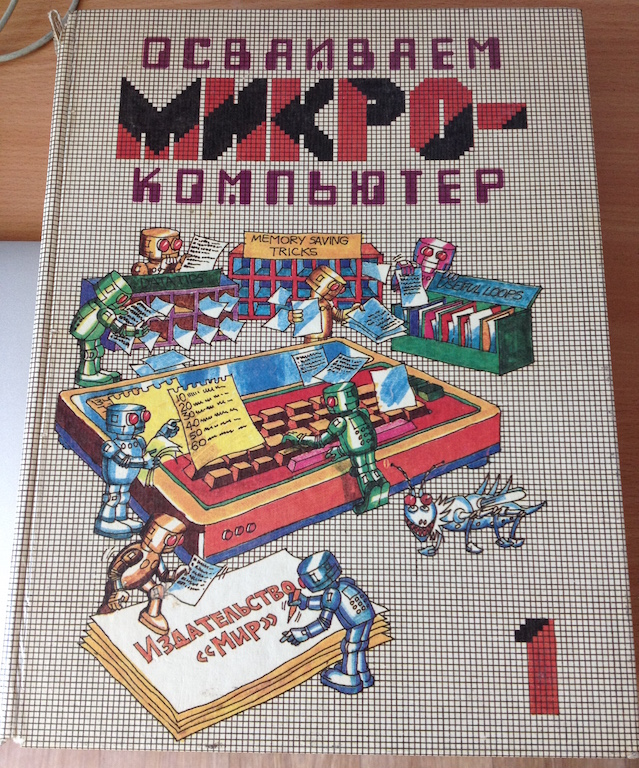
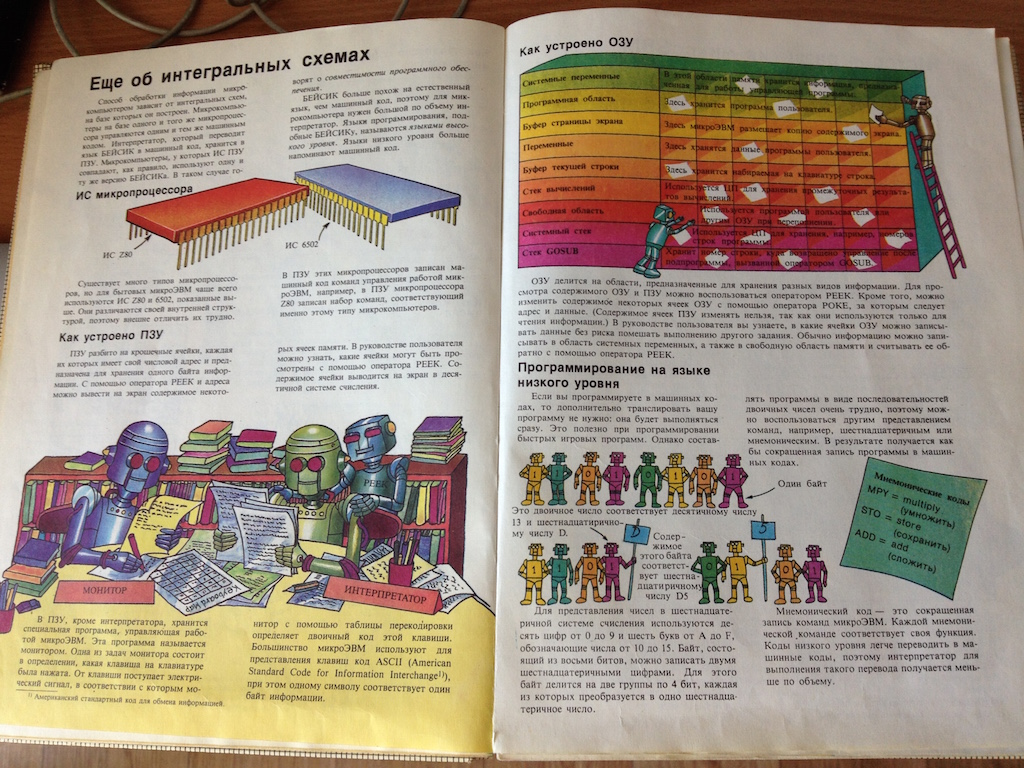
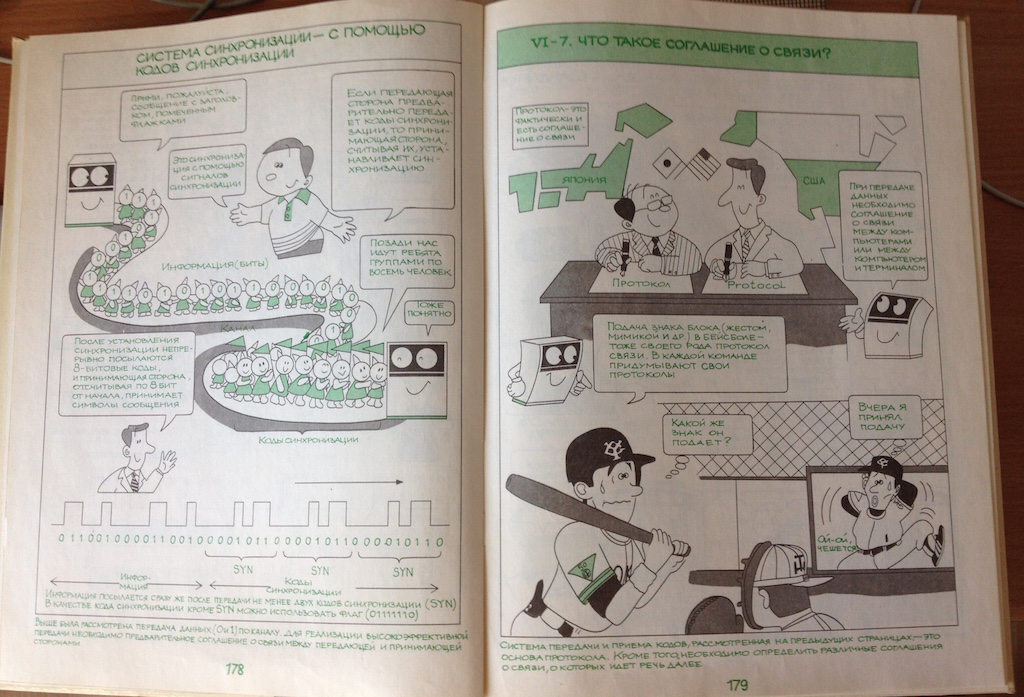
The first is “Mastering the Microcomputer” (a two-volume set). The main characters are small robots who explain how a computer is organized and talk about programming.
A chapter about computer organization:
A chapter about the basics of programming:
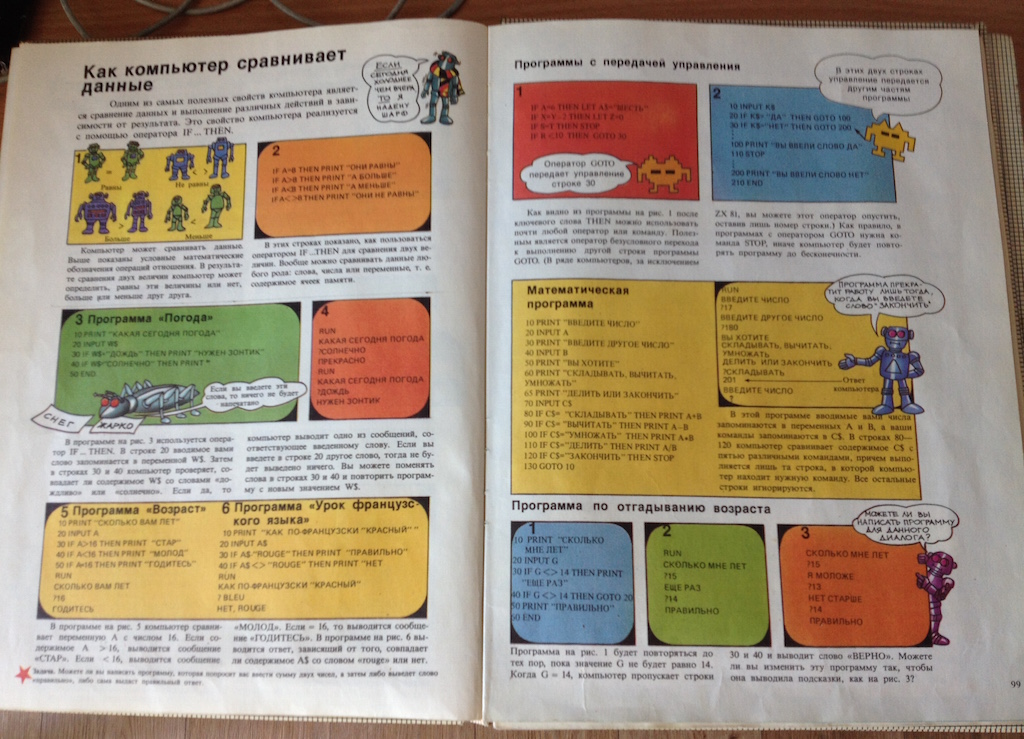
Lots of pictures, everything explained in simple terms, and, well, lovely robots. What child doesn’t like robots? I also remember that in this book the version of Basic differed a bit from the version in the ZX Spectrum clone, so not all the programs worked for me. Alas, there was no one to explain the differences, so I simply read these programs and ran them in my head, trying to understand how they worked.
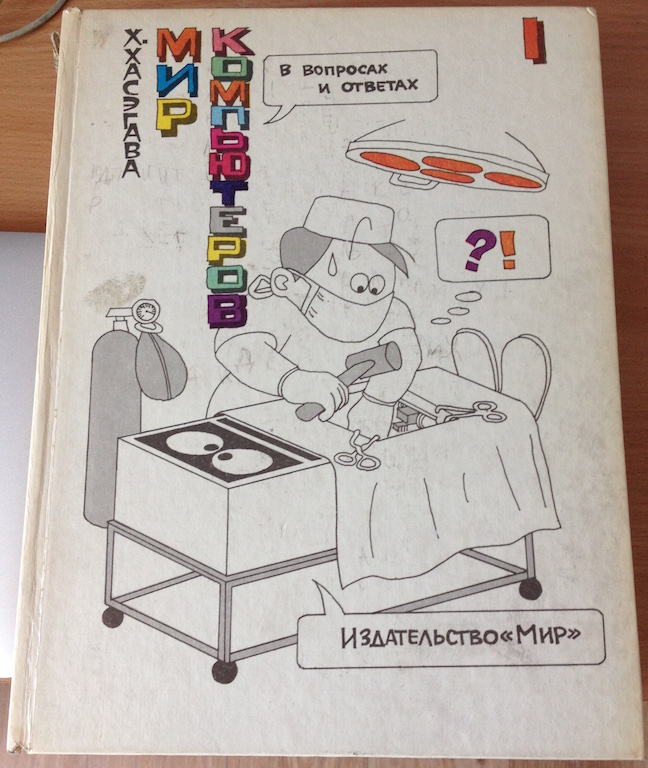
Another two-volume set is “The World of Computers in Questions and Answers.” It was written by a Japanese author and illustrated by Japanese artists, so everything is in an anime style. :)
A chapter about the programmer misunderstanding the assignment. I’ll run into that when I get older, but for now I just read it.
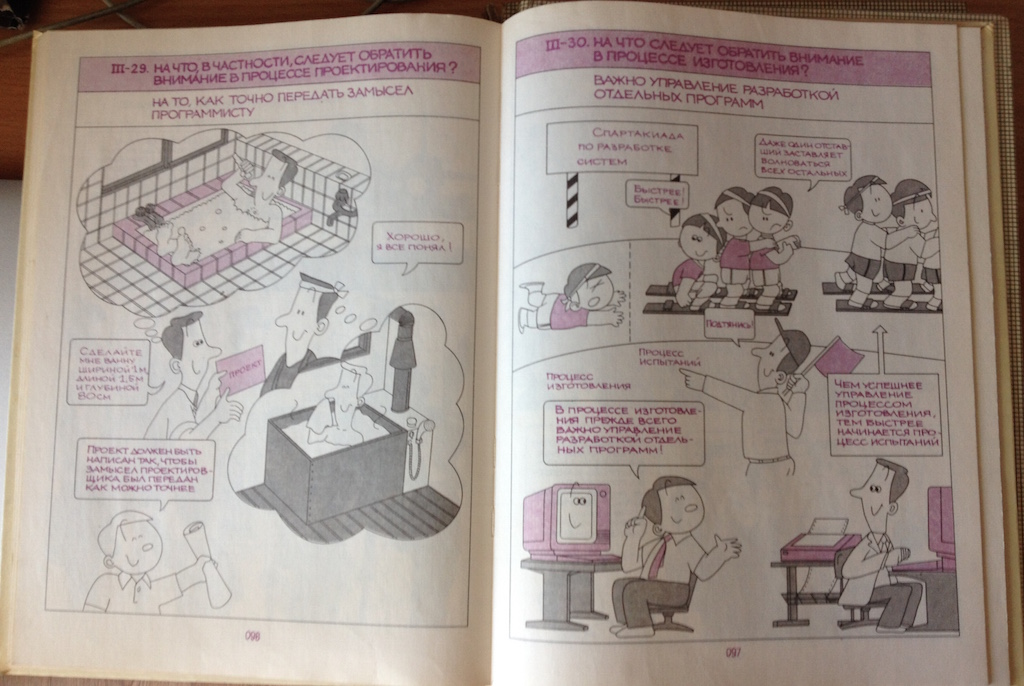
How adorable — the computer accepted the data, understood everything, and is smiling. So cute! :)
These books are very good, and despite the fact that decades have passed since they were published, I would still recommend that children read them. Unfortunately, they can no longer run all these programs from the books, because Basic is no longer popular, but they can still learn some basics of computer organization.
Recently, while browsing programming books on Balka Book, I saw an amazing book: “Programming for Kids. An Illustrated Guide to Scratch and Python”. Python! Python, Guido!
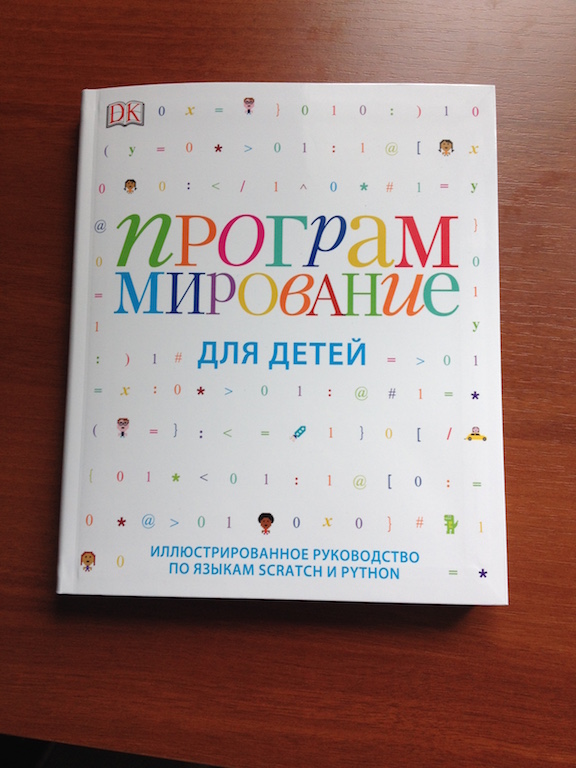
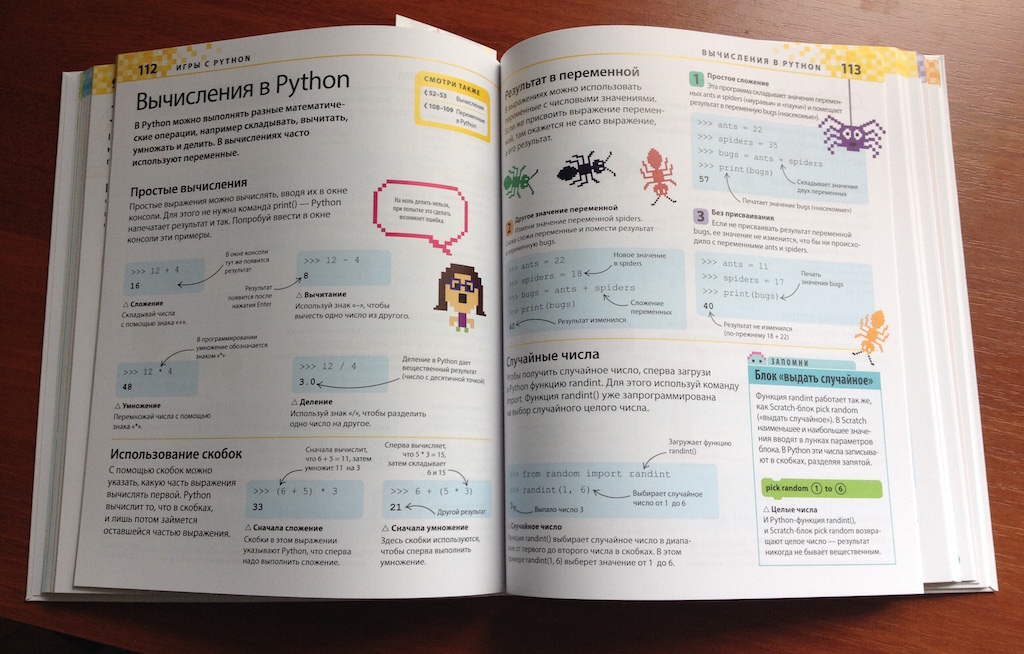
The book presents the basics of programming in modern language. And it’s all in colorful pictures, with characters, for kids. A chapter about arithmetic calculations:
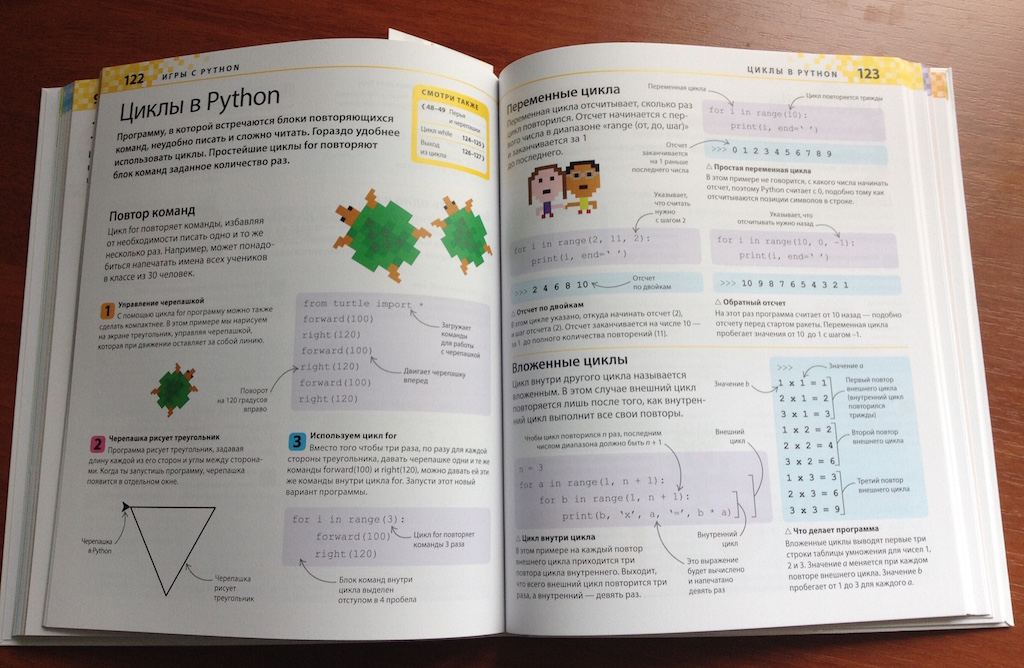
A chapter about what loops are.
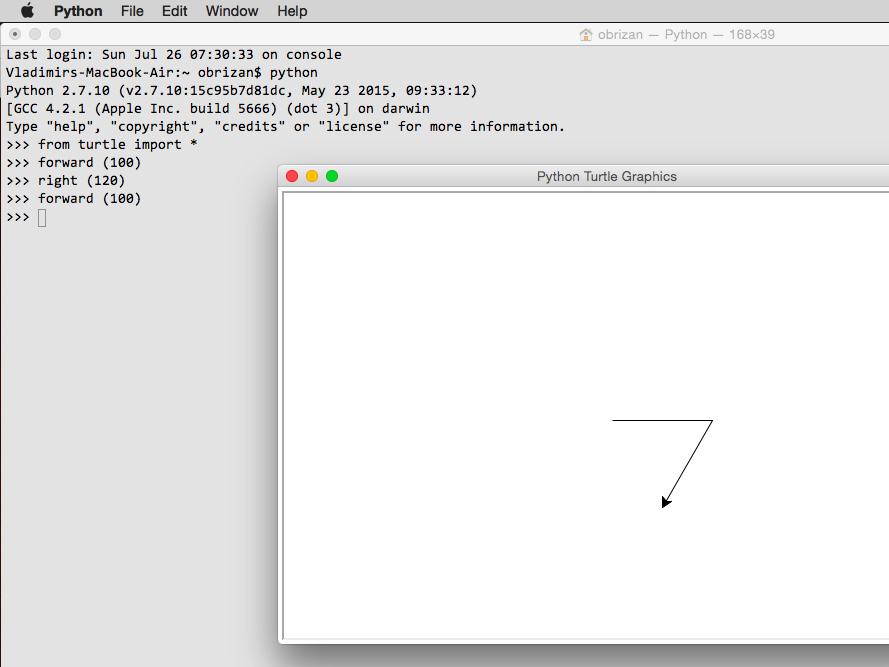
The examples use the so-called “turtle” — an imaginary animal that can be controlled with simple commands like “forward,” “turn,” and so on. Here’s what it looks like if you enter the instructions into a computer:
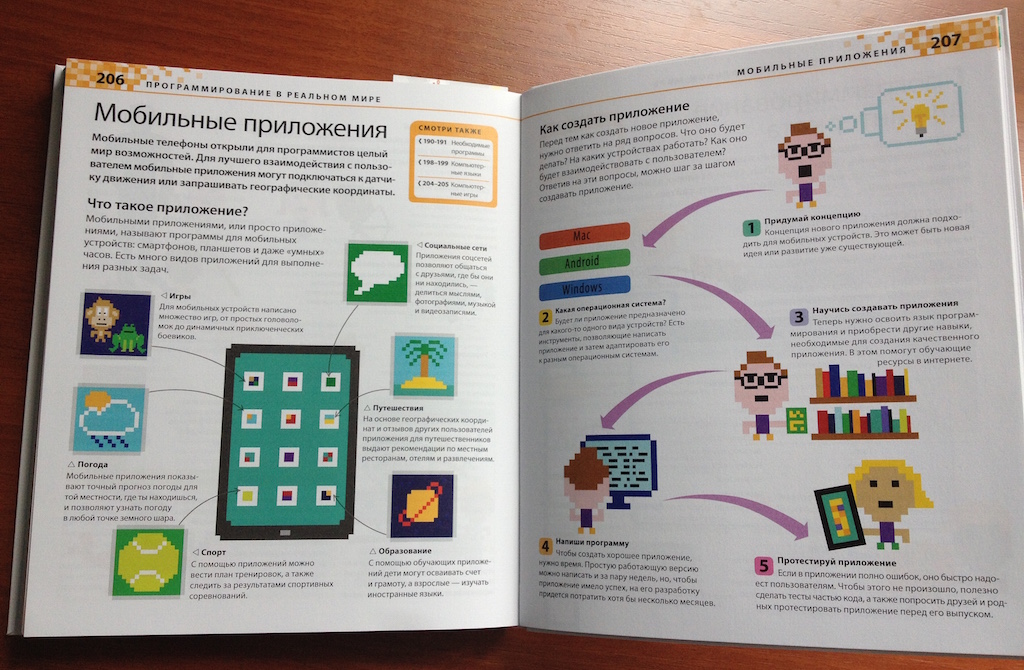
Besides teaching programming, the book also touches on other topics so that children understand where to go next.
The book’s drawback is that it costs 490 UAH ($22) — that’s more than half my salary as a senior lecturer on a 0.25 appointment at the university.
Thanks to the Mann, Ivanov and Ferber publishing house for translating and publishing such a useful book for children.