On October 24, 2015, the first meeting of the “Python at APVT” club took place. The meeting was held in room 318 of the APVT department from 11:15 to 12:50.
At the beginning, everyone introduced themselves and talked about their relationship with Python. I was pleasantly surprised to see not only people just starting to learn this language, but also guys with more than 5 years of experience.
The day before, I tried my luck and wrote to Guido van Rossum — the inventor of the Python language — asking him to write a short address on the occasion of the club’s founding.
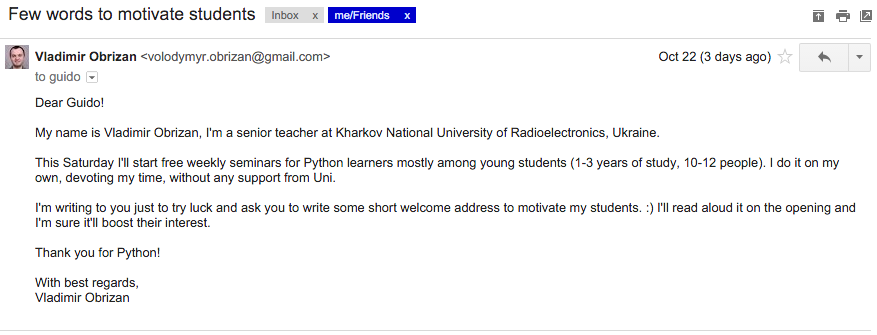
And Guido replied:
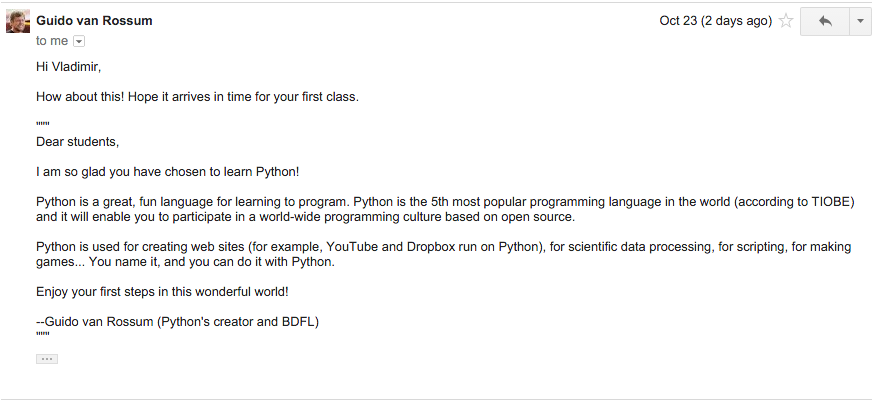
The patriarch’s blessing had been received; we could begin.
Brief notes on what we discussed at the meeting.
Principles of the club’s work
— active self-education versus passive contemplation;
— organizing horizontal connections among club members.
Let me emphasize once again — there will be no lectures or labs. There will be short talks and master classes. The main focus is self-education and communication with like-minded people.
Course on Coursera
On October 27, a free online course starts on Coursera: https://www.coursera.org/learn/python We recommended registering for this course and starting to take it. The level is beginner; no knowledge of the language is required in order to start studying it.
Books
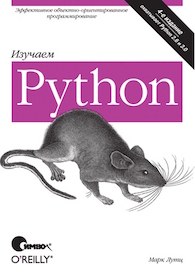
Mark Lutz, “Learning Python”, 1280 pp. Market price: 1200 UAH. A very thick book with a detailed presentation.
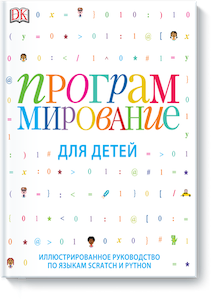
“Programming for Kids. An Illustrated Guide to the Scratch and Python Languages”. An approach to learning the language with illustrations and explanations. I have already done a short review of this book. Market price of the book: 550 UAH.
Mark Pilgrim’s “Dive into Python” and its Russian translation: “Into the Depths of the Python Language”. Online book, free.
Kenneth Lambert, “Fundamentals of Python: From First Programs Through Data Structures.”
Software
Installing the Python interpreter: http://www.python.org It is available for any platform. It is preferable to install the very latest version of the language: 3.5. You need to learn this version of the language, but be ready to adapt in some respects to version 2.6 or 2.7. It is important to write code in a style that is supported by all versions of the language.
Recommended development environment: JetBrains PyCharm Edu. This is a free development environment; it includes 50 simple beginner-level exercises for learning the basics of the language.
You can use any other development environments, including a simple console.
Where to ask questions?
In English, you can ask questions on http://www.stackoverflow.com Russian equivalent: http://ru.stackoverflow.com
A mailing list has been created where people can communicate in a closer circle: https://groups.google.com/forum/#!forum/pythonapvt You can ask questions both by email and through the web interface. Please subscribe.
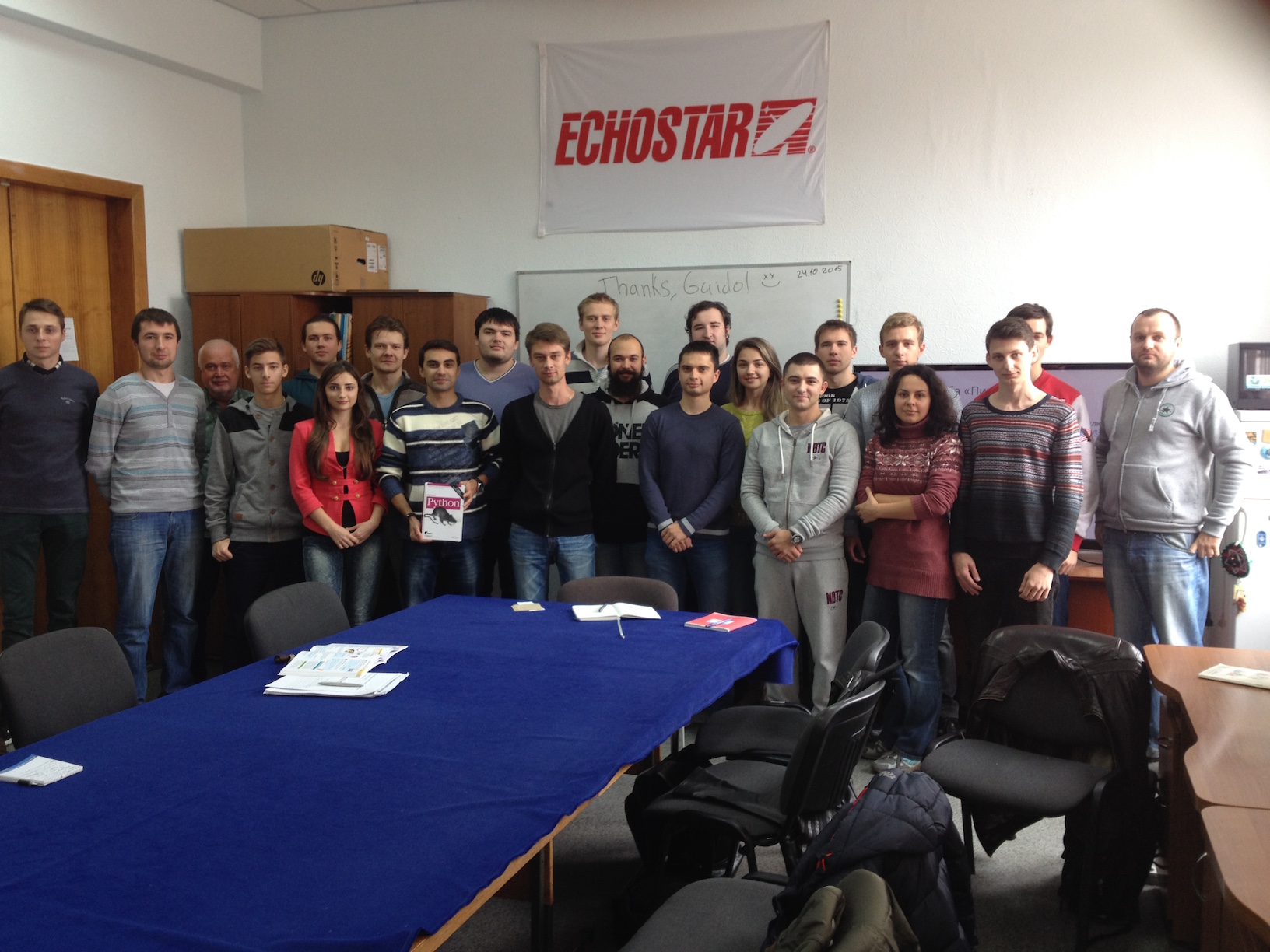
Group photo as a keepsake:
How to get news about meetings of the “Python at APVT” club?
Subscription to news about meetings of the “Python at APVT” club: http://bit.ly/python-apvt-reg The mailing list will be the main channel for information about meetings.
VKontakte and Facebook groups: https://vk.com/python.apvt and https://www.facebook.com/groups/python.apvt, respectively.
Site for questions and answers about Python and the club: https://groups.google.com/forum/#!forum/pythonapvt
Questions? You can contact me personally: volodymyr.obrizan@gmail.com