Yevpatoria is a resort town. You’re supposed to go there to relax by the sea. You can go for a long time, or you can go for a weekend. So this time the group suggested going for the weekend. As always, someone turned up who “knows a good place to stay cheap.” The good place to stay cheap turned out to be somewhere out in the steppe, 10 km from town and 3 km from the sea. The scenery is quite dreary: no vegetation except thorny weeds, no black soil, just clay and dust.
There isn’t much entertainment at the tourist camp. We practiced the so-called “kite” (in our language, a toy kite), which had been brought along in case of total gloom and hopelessness:
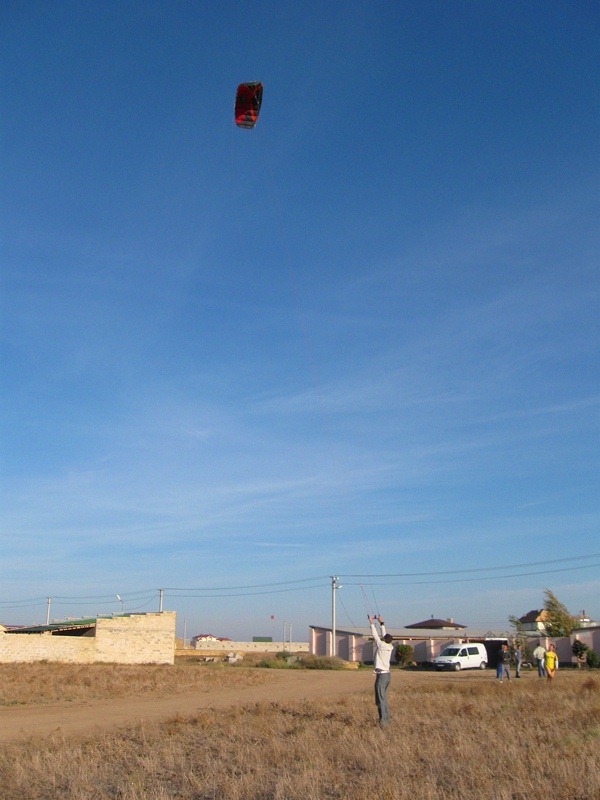
It’s a pretty interesting toy. If there’s a nice breeze, it can even drag a hefty human carcass along behind it.
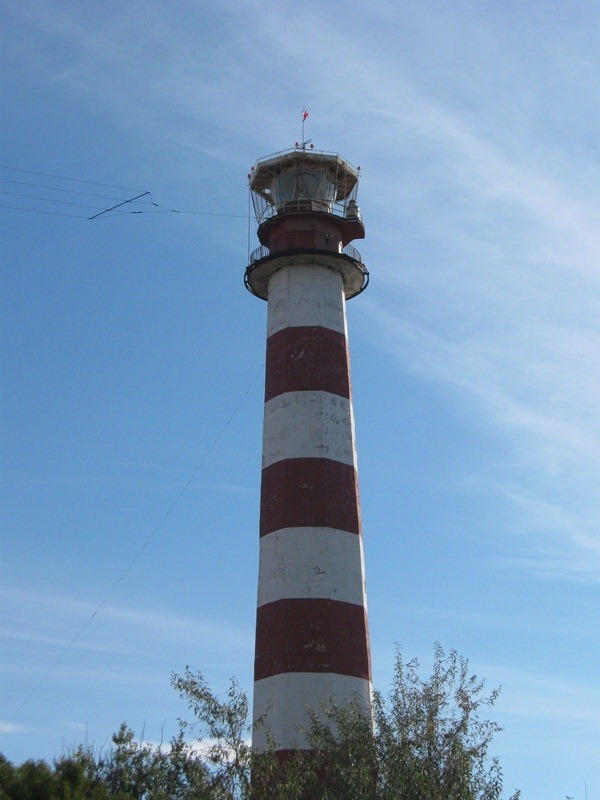
Next to the tourist camp stands a lighthouse.
After we’d had enough of playing with the kite and walking around the tourist camp, it was decided to go to the sea. The shortest route is through the enemy tourist camp. Naturally, passage costs money. Naturally, the ticket office is closed on weekends. The honest security guard categorically refused to take the fee for passage for himself. We went around.
In the off-season (late September), nobody looks after the beaches. There had been a storm during the night, and several centners of bird and fish shit and other underwater fauna had been washed ashore; under the gentle rays of the September sun, they began leisurely decomposing, causing the beachgoers, to put it mildly, some discomfort.
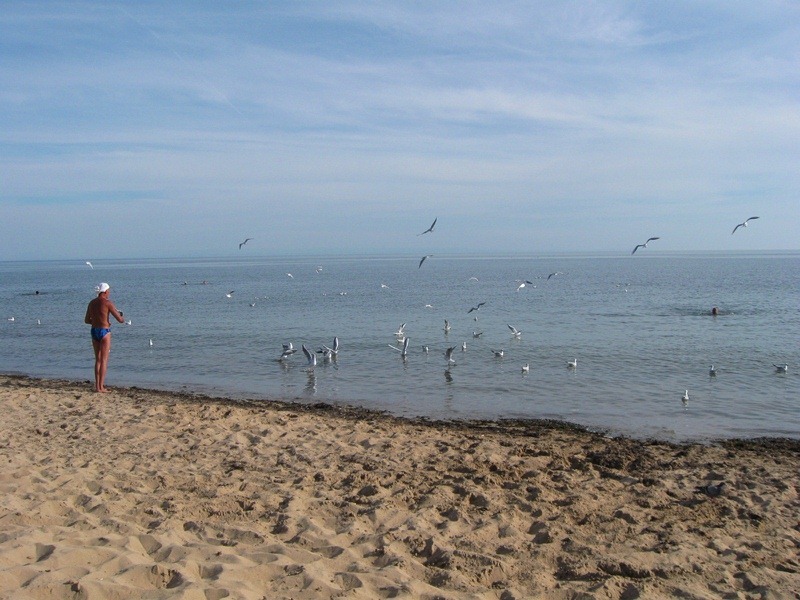
Having relaxed by the sea, the decision was made to take a walking tour of the city of Yevpatoria.
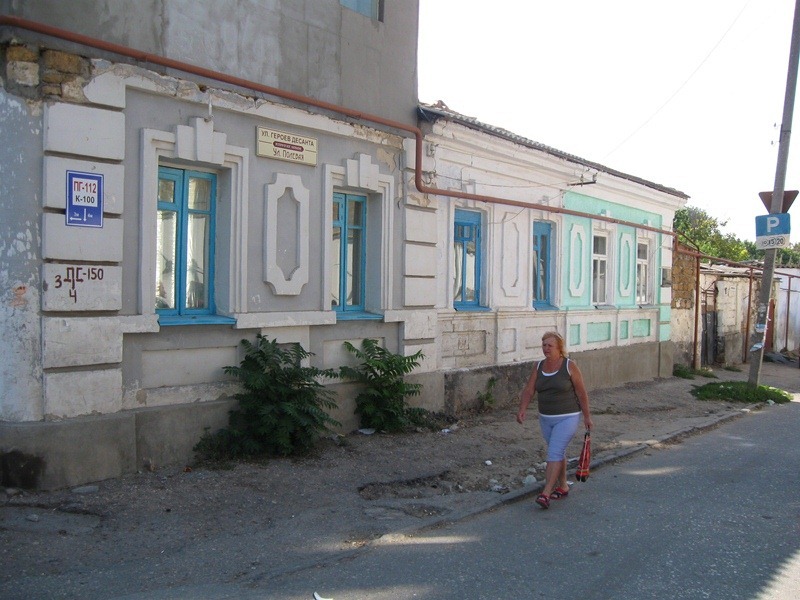
On the street signs in Yevpatoria, both the modern and historical names are shown. And the modern name (on top) is in one font, while the historical one (below) is in another. The horizon isn’t tilted; this pole really does stand like that.
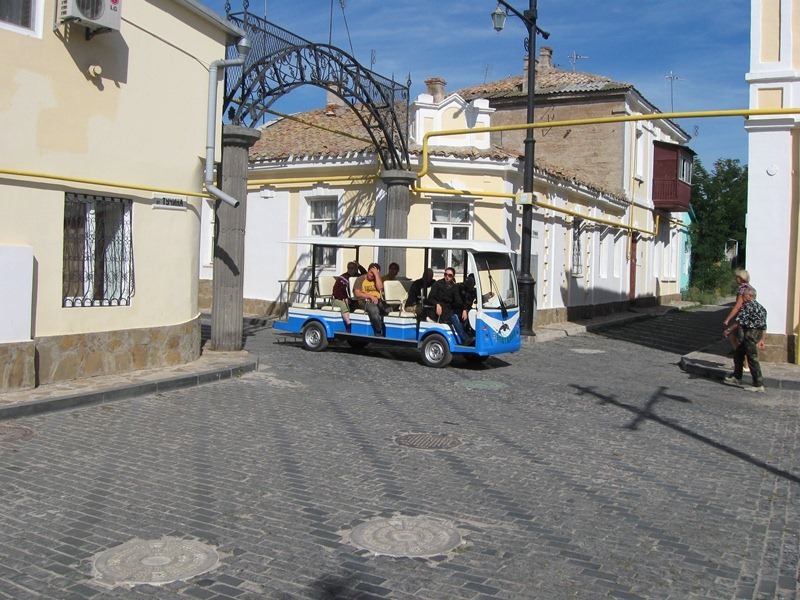
In the historic center of the city, tourists are driven around in electric carts.
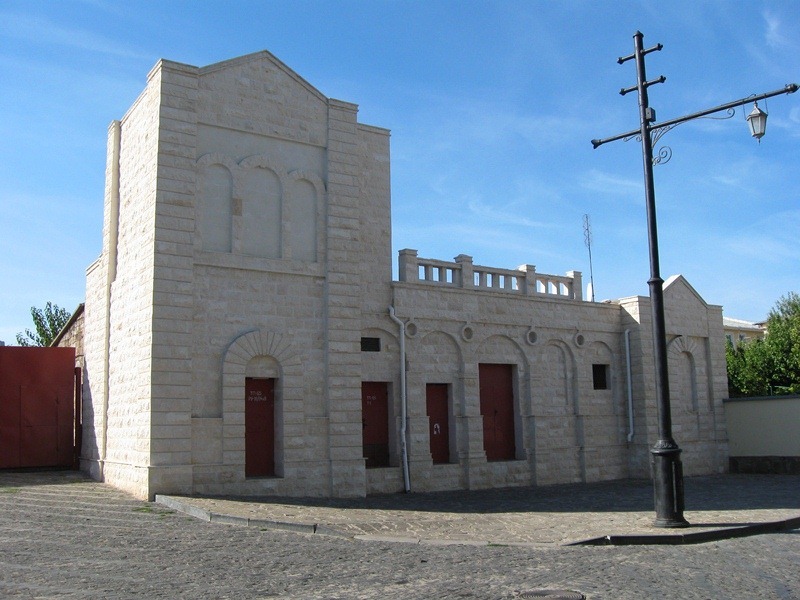
Who do you think lives in this little house? Correct — transformers.
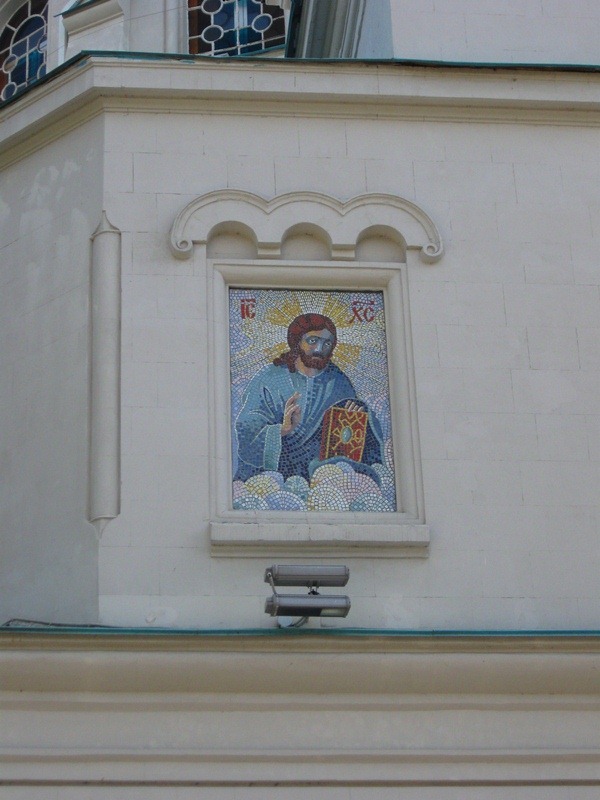
In the artist’s imagination, Christ’s face is blue. The Creator has the right to depict the Creator however he wants. Especially since no one has ever seen him.
Walking around the streets of Yevpatoria, we observed a certain number of souvenir stalls. We stopped near one of them to wait for the stragglers. The souvenir saleswoman pounced on us with reproaches that we were standing too close to her stall, thereby ruining all her business. We moved away, but the assortment of her goods interested me. I very quickly found the reason for her commercial fiasco: all the souvenirs were boring. Among hundreds of trinkets, not a single one of them in any way reminded you of Yevpatoria. All her souvenirs were exactly the same souvenir junk sold in any city.
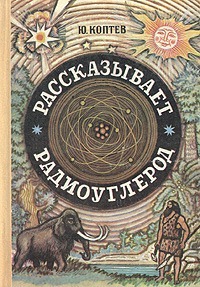
Nevertheless, waiting for the stragglers paid off. Looking around, I found an old lady selling old books. After a quick scan, my eye stopped on Yuri Koptev’s book “Radiocarbon Tells the Story” (1976). The book cost all of two hryvnias and turned out to be quite interesting. It talks about radiocarbon analysis, dendrochronology, space, and also climate changes over centuries and millennia. (Yes, global warming is a fiction.)
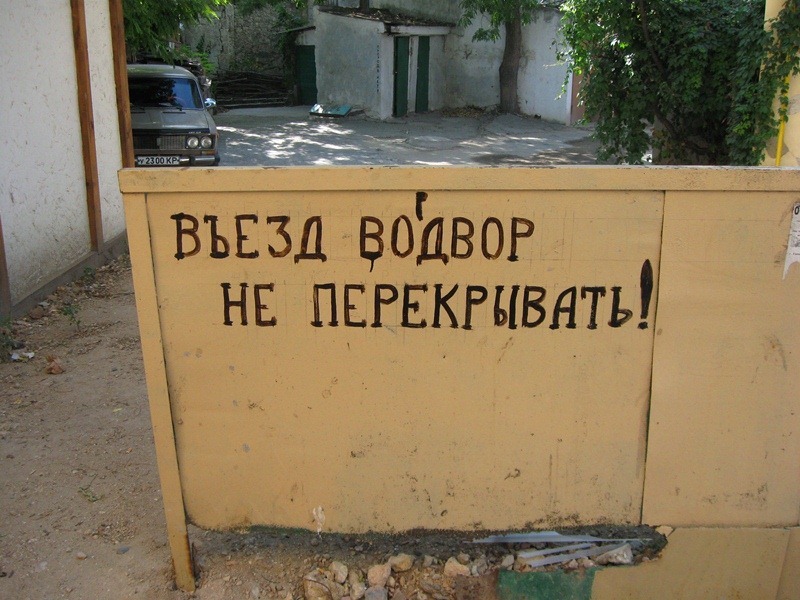
The designer diligently prepared a modular grid, but the production engineer didn’t give a damn about it. I was about to hit Backspace, but it was too late.
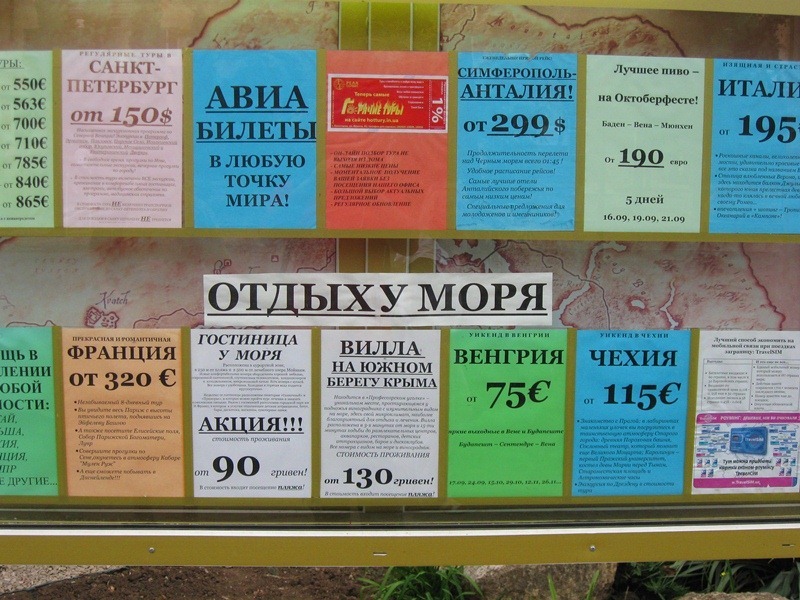
A variety of ads for other resorts turned up. Apparently, this is advertising for locals, to whom Yevpatoria doesn’t seem like a resort at all, and who want A VACATION OF SEA.
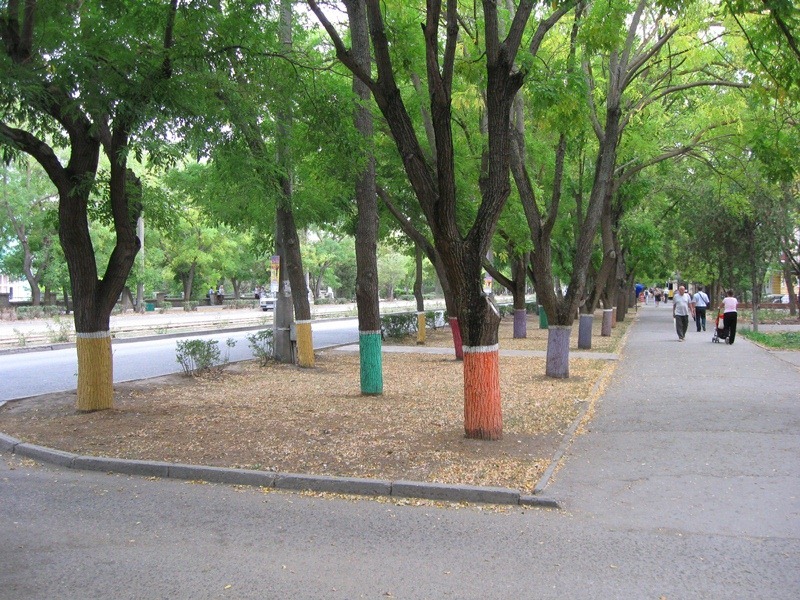
The functional and aesthetic components of urban design: the animals won’t chew it up, and the little eyes are pleased.
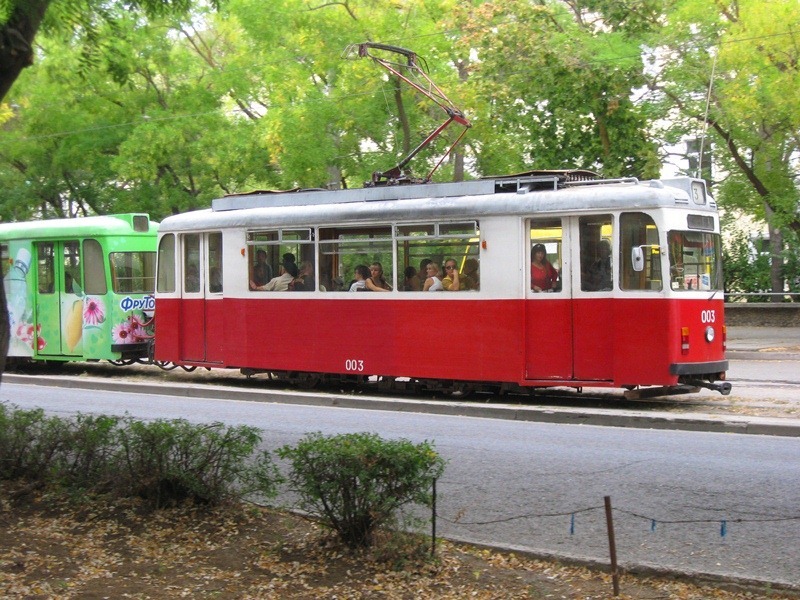
The Yevpatoria tram.
And so we reached the embankment.
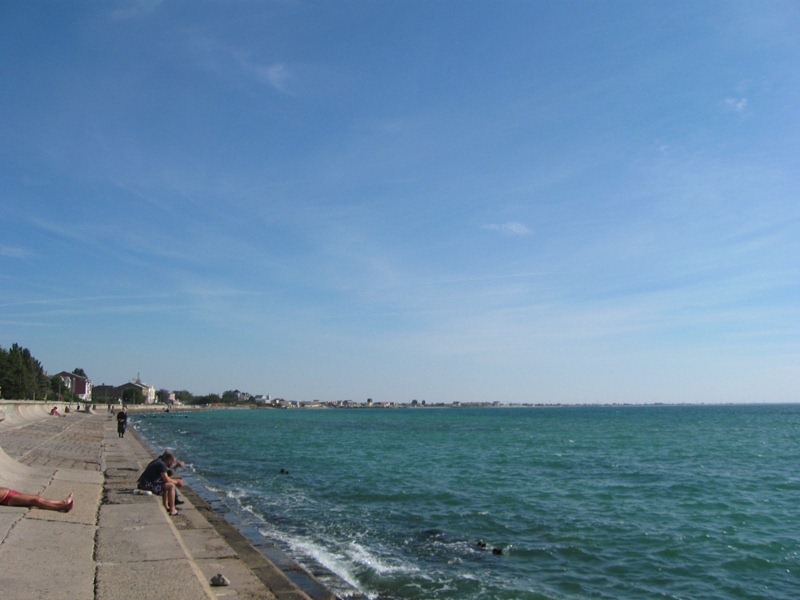
In September, Yevpatoria is a fairly deserted place. There aren’t many people in the greasy spoons, so all the waiters line up at the entrances and stare for hours at the empty street: “Well, what if someone wanders in here for a bite to eat?”
Strolling through the streets in the center of Yevpatoria, we noticed some familiar plotlines.
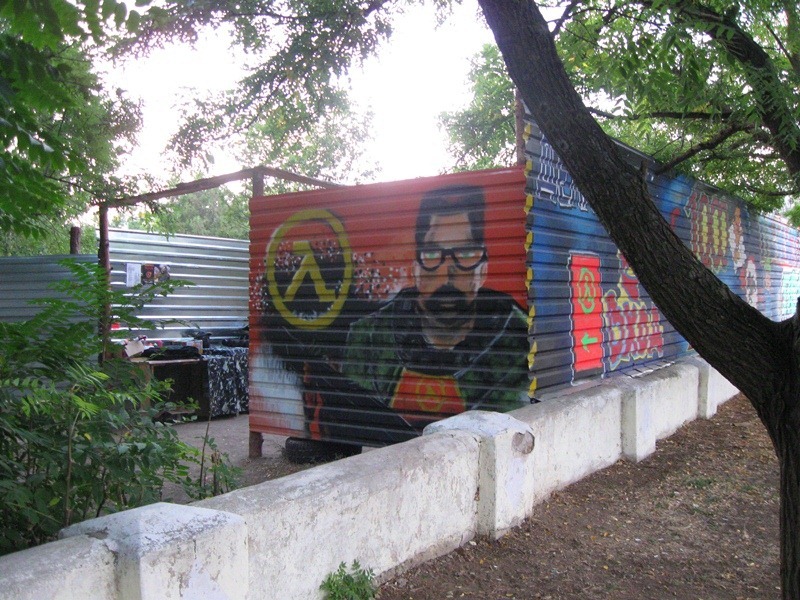
The work of translation morons, close up:
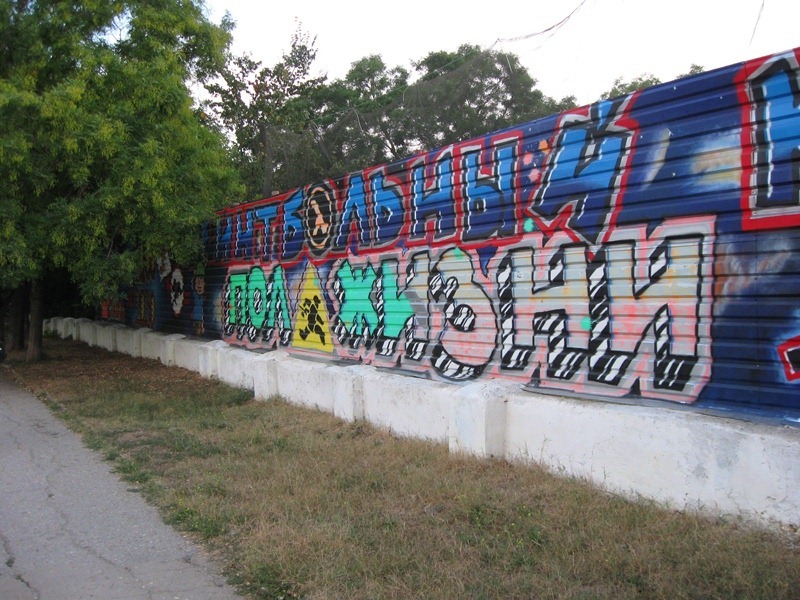
This is how the little sea makes noise in Yevpatoria:
I don’t think I’ll come back here to vacation again.